Faith over Fear Streetwear Christian
As someone who’s stitched hundreds of designs across baby onesies, boutique sweatshirts, and custom embroidered patches for Etsy sellers, I opened Faith over Fear Streetwear Christian expecting a bold, wearable statement — and it delivered. But not without nuance. Let me walk you through how this design actually behaves when translated from screen to stitch, especially in real-world embroidery projects.
A First Impression That Lands Quietly, Then Stays
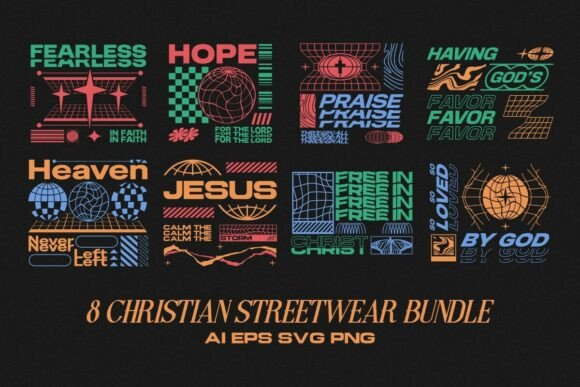
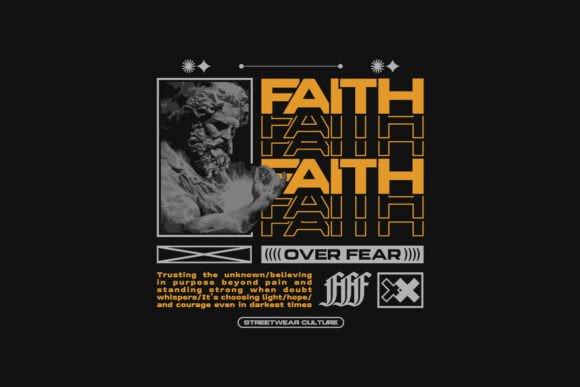
The moment you preview the vector files (EPS, SVG, AI, PNG), you notice what makes Faith over Fear Streetwear Christian stand apart: clean negative space, balanced letter spacing, and intentional weight distribution in the typography. It’s not ornate — no halos, no vines, no excessive flourishes. That’s a strength. This isn’t a design shouting from a billboard; it’s a calm, confident whisper on a charcoal crewneck or a natural cotton tote bag. I recently tested it on a medium-weight unbleached canvas tote for a local church fundraiser — and the result felt grounded, sincere, and handmade without looking DIY.
Where It Shines: Real Projects, Real Fabric
Faith over Fear Streetwear Christian works best where authenticity matters more than flash. Think:
- Sweatshirt embroidery — The letterforms hold up beautifully at 3.5"–4.5" width on fleece-backed fabric, especially with a light stabilizer backing.
- Embroidered patch — Clean edges mean crisp satin-stitched borders and minimal fraying during cut-and-sew assembly.
- Baby embroidery — On a soft cotton onesie, the moderate stroke thickness avoids stiffness while remaining legible after repeated washing.
- Tote bag design — Its horizontal orientation and open composition fill space without crowding handles or seams.
- Holiday embroidery — Paired with neutral thread (navy, heather gray, deep olive), it reads as timeless — not seasonal — making it ideal for Christmas gifts, baptism keepsakes, or Easter brunch aprons.
It also translates well into print-ready mockups: the 300 DPI PNG holds detail for digital product previews, and the vector files scale cleanly for large-format heat transfers or sublimation on polyester blends.
Where to Pause — Not a Flaw, Just a Fit Check
This isn’t a one-size-fits-all machine embroidery design. Its thoughtful simplicity becomes a limitation in certain contexts:
- Small hoop sizes (<4") — The full phrase needs breathing room. Shrinking below 3" risks losing legibility in the “over” and “fear” spacing. Consider using just “Faith” or “Fear” as standalone motifs if tight hoops are your only option.
- Textured or stretchy fabric — On ribbed knits or thin jersey tees, the even fill stitch density (common in clean typographic designs like this) can cause puckering unless paired with tear-away + cut-away stabilizer combo.
- Curved surfaces like caps — The straight-line baseline doesn’t adapt naturally to crown curvature. You’ll need to adjust digitizing or choose a simplified version for front-panel cap embroidery.
- Dark fabric with light thread — While the PNG preview looks sharp, test stitching on black or navy first. Some vector-to-embroidery conversions lose subtle kerning in dense satin columns — verify spacing holds under thread tension.
What It Adds to Your Finished Product — Beyond Aesthetics
Using Faith over Fear Streetwear Christian elevates perceived value without demanding premium pricing. Customers recognize sincerity in restraint — it feels chosen, not slapped on. For craft businesses and Etsy sellers, that builds trust faster than a busier, trend-driven graphic. I’ve seen repeat buyers specifically request this phrase on personalized gifts: graduation hoodies, nurse appreciation blankets, recovery pillows after surgery. Its quiet confidence invites connection.
For branding consistency, it pairs seamlessly with minimalist logos or monograms — no visual competition. And because it’s offered as both vector and high-res raster files, you can use the same asset across embroidery, printable mockups, and social media banners — a real time-saver for small shop owners managing multiple sales channels.
Practical Embroidery Designer Notes — Before You Stitch
Before committing to a client order or bulk run, here’s what I always do with a new digital embroidery file like Faith over Fear Streetwear Christian:
- Run a test stitch on scrap fabric matching your final substrate — same thread count, same stabilizer type.
- Check thread color contrast on both light and dark backgrounds — especially where “over” sits between two heavier words.
- Review stitch density in the letter interiors — too dense = stiffness; too sparse = gaps. Adjust if needed before hooping.
- Confirm your hoop size accommodates the full width comfortably — no edge compression.
- Inspect corners and inner curves for potential under-stitching or jump stitches — common in vector-based lettering converted to embroidery.
- Try a black-and-white mockup — reveals balance issues invisible in color previews.
- Use proper stabilizer for your fabric: cut-away for knits, tear-away for stable wovens, mesh for lightweight linens.
- Verify licensing terms before selling finished items or reselling the design assets — the listing says “Ready-to-Print,” but commercial rights aren’t explicitly stated.
Remember: a great machine embroidery design isn’t just about what looks good on screen — it’s about how it moves with fabric, wears over time, and resonates with the person wearing it. Faith over Fear Streetwear Christian earns its place in my go-to folder for custom apparel, heartfelt gifts, and small-batch merchandise — not because it’s flashy, but because it’s honest, adaptable, and quietly powerful.